
Walk into any Indian kitchen and you'll find both — a battered non-stick pan for eggs and a heavy cast iron tawa for rotis. But when you're choosing just one, which should it be? We put both head-to-head across the things that matter most for Indian cooking.
The Indian Kitchen Test
Indian cooking is uniquely demanding on cookware. We cook at high heat, use large quantities of oil and ghee, cook acidic curries with tomatoes and tamarind, and expect our pans to handle everything from delicate dosas to heavy biryanis. Let's see how each performs.
Head-to-Head Comparison
| Feature | Cast Iron | Non-Stick |
|---|---|---|
| Heat retention | ⭐⭐⭐⭐⭐ Exceptional | ⭐⭐⭐ Moderate |
| High-heat cooking | ⭐⭐⭐⭐⭐ Handles 500°C+ | ⭐⭐ Coating degrades above 260°C |
| Non-stick performance (new) | ⭐⭐⭐ Good when seasoned | ⭐⭐⭐⭐⭐ Excellent |
| Non-stick performance (5 yrs) | ⭐⭐⭐⭐⭐ Gets better | ⭐ Coating worn out |
| Health & safety | ⭐⭐⭐⭐⭐ 100% toxin-free | ⭐⭐ PTFE/PFOA concerns at high heat |
| Iron enrichment in food | ⭐⭐⭐⭐ Yes — adds dietary iron | ❌ None |
| Lifespan | ⭐⭐⭐⭐⭐ Decades to lifetime | ⭐⭐ 2–5 years typically |
| Cost over 10 years | ⭐⭐⭐⭐⭐ Very low | ⭐⭐ Replace every 3–5 years |
| Induction compatible | ⭐⭐⭐⭐⭐ Yes | ⭐⭐⭐ Only induction-base models |
| Weight | ⭐⭐ Heavy (2–3 kg) | ⭐⭐⭐⭐⭐ Light |
| Ease of cleaning | ⭐⭐⭐ Needs proper technique | ⭐⭐⭐⭐⭐ Easy wipe |
Where Cast Iron Wins Clearly
1. The Tadka Test
A proper tadka needs instant high heat — mustard seeds must splutter within seconds, curry leaves should crisp, not steam. Non-stick coatings begin degrading at 260°C and release fumes at 315°C. Cast iron handles this effortlessly at any temperature.
2. The Roti & Dosa Test
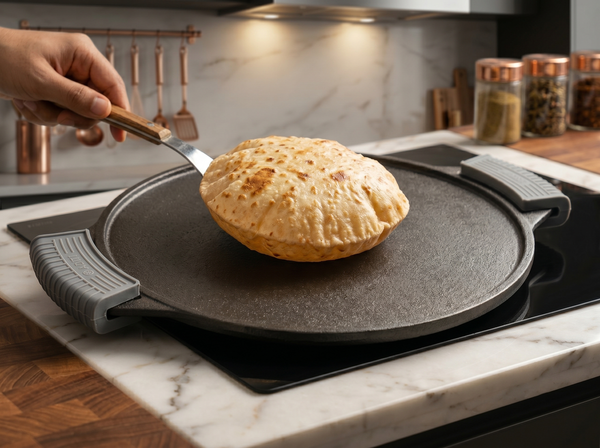
A well-seasoned cast iron tawa retains heat so evenly that rotis puff up perfectly and dosas crisp without sticking. The thermal mass means it doesn't lose heat when you place cold dough, giving you consistent results every time.
3. The Longevity Test
A quality cast iron kadhai bought today will still be in use in 2045. Non-stick coatings typically last 2–5 years with careful use — less if you cook at high heat regularly. The true cost of non-stick is buying replacements every few years.
"My grandmother's cast iron tawa is older than I am — and it makes better dosas than any non-stick pan I've ever bought."
— Aditi Kitchenware customer, Bengaluru
Where Non-Stick Has an Edge
To be fair, non-stick is genuinely better for:
- Eggs on low heat — scrambled eggs or omelettes slide out perfectly without seasoning concerns
- Delicate fish — fillets that might break apart when stuck
- Users with limited wrist strength — a 3kg cast iron kadhai isn't for everyone
- Quick weekday cooking — no maintenance, just wipe and go
Our Verdict for Indian Cooking
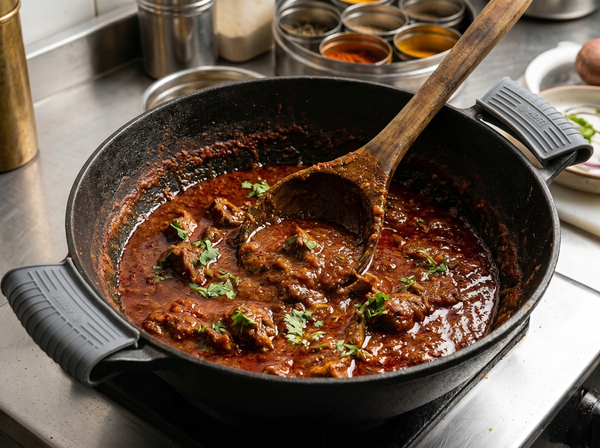
If you cook Indian food regularly at medium-to-high heat — and most of us do — cast iron is the superior long-term choice. It's safer, more durable, performs better as it ages, and adds iron to your food (a genuine health benefit in a country where iron deficiency is common).
The ideal kitchen has both: a cast iron tawa for rotis and dosas, a cast iron kadhai for gravies and frying, and a non-stick pan for eggs and delicate foods.
Explore Aditi Kitchenware's pre-seasoned cast iron range — built for the demands of real Indian cooking.
Shop Cast Iron →