
A well-seasoned cast iron pan is one of the most prized possessions in an Indian kitchen. It's naturally non-stick, gets better with every use, and with proper care, can outlast generations. But seasoning confuses many first-time owners. This guide takes all the mystery out of it.
What Is Seasoning?
Seasoning is the process of baking thin layers of oil into the surface of the cast iron, creating a hard, smooth, polymerised coating. This coating is what gives cast iron its natural non-stick property and protects it from rust. Every time you cook with oil and heat, you add another microscopic layer — making the pan better over time.
💡 Key fact: All Aditi Kitchenware cast iron products come pre-seasoned with vegetable oil, so your first layer is already done. You just need to maintain and build on it.
First-Time Use — What To Do
- Rinse with warm water — no soap needed. Just rinse and dry immediately with a cloth.
- Heat on the stove for 2–3 minutes on medium heat to evaporate all moisture.
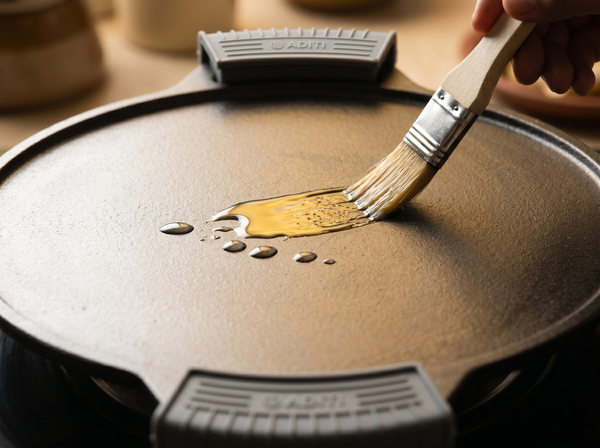
- Apply a thin layer of oil — use any neutral oil (vegetable, sunflower, or flaxseed). Use a paper towel to rub it all over — inside, outside, and the handle.
- Heat again for another 5 minutes until the pan stops smoking.
- You're ready to cook. Start with oil-rich foods like tadka, fried foods, or sautéed vegetables for the first few uses.
How To Re-Season (When Needed)
Re-season when your pan looks dull, feels sticky, or develops rust spots. Here's how:
- Scrub with steel wool or coarse salt + oil to remove rust or old residue.
- Wash, rinse well, and dry completely on a hot stove.
- Apply a very thin layer of oil all over (inside and out).
- Place upside down in an oven at 200°C for 1 hour. Put a foil sheet on the rack below to catch drips.
- Turn off the oven and let the pan cool inside.
- Repeat 2–3 times for a stronger layer.
"Cast iron rewards patience. The more you cook with it and care for it, the better it performs."
— Aditi Kitchenware
Daily Maintenance Tips
- Clean while warm — rinse under warm water and scrub gently with a brush or chain mail scrubber. Never soak.
- Dry immediately — water is the enemy of cast iron. Dry with a cloth then heat on the stove for 1–2 minutes.
- Light oil after every wash — rub a few drops of oil on the cooking surface before storing.
- Store in a dry place — avoid humid cabinets. A light cloth or paper towel between stacked pans prevents scratches.
- Never use soap — it strips the seasoning layer. Hot water and a stiff brush are all you need.
What To Cook First
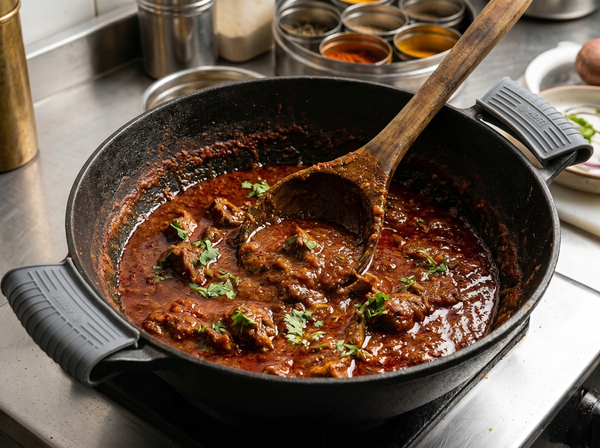
For a newly seasoned pan, avoid acidic foods (tomatoes, tamarind, lemon) for the first few uses. Start with:
- Ghee tadka — the fat polymerises beautifully into the surface
- Fried onions, jeera aloo, or stir-fried vegetables
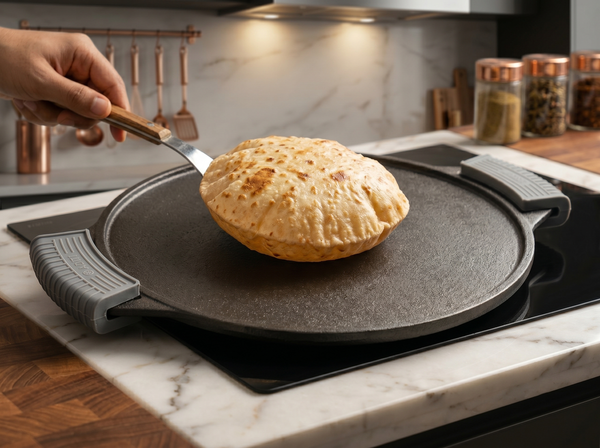
- Parathas or rotis on the tawa
- Shallow-fried snacks like vadas or pakoras
After 8–10 uses with oily, high-heat cooking, your pan will have a noticeably smoother, darker, more non-stick surface.
Common Seasoning Mistakes
| Mistake | What Happens | Fix |
|---|---|---|
| Too much oil at once | Sticky, gummy coating | Always use the thinnest possible layer |
| Washing with soap | Strips the seasoning | Hot water + stiff brush only |
| Storing wet | Rust forms quickly | Always dry on stove heat before storing |
| Cooking acidic foods early | Seasoning dissolves | Wait until pan is well-seasoned (10+ uses) |
| Sudden temperature changes | Can warp or crack | Heat and cool gradually |
Browse our full range of pre-seasoned cast iron cookware — ready to use from day one.
Shop Cast Iron →